
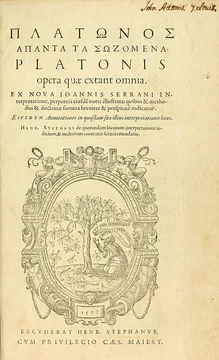
Stage 10 · The Grand Tour
Apology
Socrates' defense speech at his trial, analyzed as speech that stands by its convictions.
Questions waiting on this journey
- Part 9Socrates calls himself a 'gadfly' that keeps waking up a sleepy horse. Does a society need people who annoy it with hard questions?
- Part 13Socrates says 'the unexamined life is not worth living.' What does it mean to examine your life, and why might it matter more than life itself?
- Last partWas Socrates's defence a failure because he lost, or a success because he never stopped telling the truth? What does it mean to win?
The first stop is open right now. Just walk one stop with me today. When you want to know what happens next, open the next door.
Pyeonggojae subscription
₩3,400 a month
₩29,900 a year — about ₩82 a day
- Lessons 2 to 15 of every Grand Tour
- Keep reading to the end of each book after lesson 15
- With Thomas or at your own pace — your choice
Before you subscribe
Try the first stop
- Lesson 1 of any book, start to finish
- Turn the pages with the original and a Korean translation
- Words, understanding and a short piece of writing, with Thomas to help
0 of 15 parts done
- Lesson 1FreeSocrates says the judge should care about the truth of his words, not the manner. Can truth persuade without fine speech?Start
- Lesson 2SubscriptionSocrates says he has 'no knowledge of the kind' that teachers sell. Why might admitting what you do not know be a strong way to defend yourself?Locked
- Lesson 3SubscriptionSocrates concludes that he is wiser only because he does not think he knows what he does not know. Is knowing your own ignorance a kind of wisdom?Locked
- Lesson 4SubscriptionThe poets and craftsmen knew real things, yet thought they knew 'all sorts of high matters.' Why is being an expert in one field dangerous when we judge everything else?Locked
- Lesson 5SubscriptionSocrates asks, 'what is their hatred but a proof that I am speaking the truth?' Is being hated ever good evidence that you are right?Locked
- Lesson 6SubscriptionSocrates says a court is 'a place not of instruction, but of punishment.' Should someone who does wrong without knowing it be punished, or taught?Locked
- Lesson 7SubscriptionSocrates shows that Meletus's charge contradicts itself. If an accusation is self-contradictory, does that prove the accused is innocent?Locked
- Lesson 8SubscriptionSocrates says a good man 'ought not to calculate the chance of living or dying,' only whether he is doing right or wrong. Is there anything worth more than staying alive?Locked
- Lesson 9SubscriptionSocrates calls himself a 'gadfly' that keeps waking up a sleepy horse. Does a society need people who annoy it with hard questions?Locked
- Lesson 10SubscriptionSocrates offers 'not words only, but... actions' as evidence. Why do actions prove character better than words?Locked
- Lesson 11SubscriptionSocrates refuses to bring his weeping children into court. Should a judge be moved by pity, or only by evidence and law?Locked
- Lesson 12SubscriptionAsked to propose his own penalty, Socrates proposes a reward. Is this honesty, pride, or both?Locked
- Lesson 13SubscriptionSocrates says 'the unexamined life is not worth living.' What does it mean to examine your life, and why might it matter more than life itself?Locked
- Lesson 14SubscriptionFacing death, Socrates argues that death may be 'a good,' yet his last words are 'Which is better God only knows.' Is his reasoning convincing, or is he comforting himself and his friends?Locked
- Lesson 15SubscriptionWas Socrates's defence a failure because he lost, or a success because he never stopped telling the truth? What does it mean to win?Locked
When signed in, progress is saved to My library. Otherwise it stays on this device only.