
Stage 9 · The Grand Tour
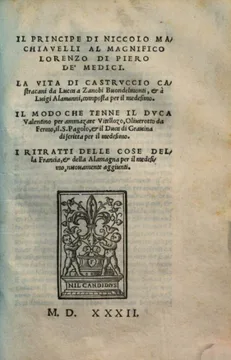
The Prince
A cool-eyed guide to gaining and keeping power, for debating ends and means.
Questions waiting on this journey
- Part 9Machiavelli says "every one sees what you appear to be, few really know what you are." Is a leader's image more important than his true character?
- Part 13Machiavelli says fortune governs half our actions but leaves the other half to us. How much of a person's life is shaped by chance, and how much by their own choices and preparation?
- Last partIs Machiavelli a teacher of evil, an honest observer of power, or a patriot who wanted to save his country? What should a good leader learn from him, and what should he refuse?
The first stop is open right now. Just walk one stop with me today. When you want to know what happens next, open the next door.
Pyeonggojae subscription
₩3,400 a month
₩29,900 a year — about ₩82 a day
- Lessons 2 to 15 of every Grand Tour
- Keep reading to the end of each book after lesson 15
- With Thomas or at your own pace — your choice
Before you subscribe
Try the first stop
- Lesson 1 of any book, start to finish
- Turn the pages with the original and a Korean translation
- Words, understanding and a short piece of writing, with Thomas to help
0 of 15 parts done
- Lesson 1FreeMachiavelli judges King Louis XII only by whether his choices kept power, not by whether they were just. What do we gain, and what do we lose, when we judge rulers this way?Start
- Lesson 2SubscriptionMachiavelli says a city that remembers its freedom never forgets it. Why might the memory of freedom be stronger than fear or favors?Locked
- Lesson 3SubscriptionMachiavelli says "all armed prophets have conquered, and the unarmed ones have been destroyed." Is power without force really doomed, or can ideas win on their own?Locked
- Lesson 4SubscriptionMachiavelli says Agathocles's methods "may gain empire, but not glory." What is the difference between power and glory, and which one does Machiavelli really value?Locked
- Lesson 5SubscriptionMachiavelli says the people's aim is "more righteous" than the nobles', because they only wish not to be oppressed. Should a ruler side with the many or the powerful few, and why?Locked
- Lesson 6SubscriptionMachiavelli says "there cannot be good laws where the state is not well armed." Is force really the foundation of law, or can law stand on something else?Locked
- Lesson 7SubscriptionMachiavelli says a wise prince would "rather lose with his own arms than conquer with the others." Why might a victory that depends on others not be a real victory?Locked
- Lesson 8SubscriptionMachiavelli asks "whether it be better to be loved than feared or feared than loved." Is his answer true to human nature, or does it leave something important out?Locked
- Lesson 9SubscriptionMachiavelli says "every one sees what you appear to be, few really know what you are." Is a leader's image more important than his true character?Locked
- Lesson 10SubscriptionMachiavelli advises a new prince to take from Severus what is needed to found a state and from Marcus what is needed to keep it. Can a person mix cruelty and goodness like this, or does one always win over the other?Locked
- Lesson 11SubscriptionMachiavelli concludes that "the best possible fortress is not to be hated by the people." Why might trust be a stronger defense than walls?Locked
- Lesson 12SubscriptionMachiavelli says a prince is respected "when he is either a true friend or a downright enemy," and that neutrality usually ruins him. Is it always wiser to take a side?Locked
- Lesson 13SubscriptionMachiavelli says fortune governs half our actions but leaves the other half to us. How much of a person's life is shaped by chance, and how much by their own choices and preparation?Locked
- Lesson 14SubscriptionThe cool analyst of power ends his book with a passionate call to free Italy. Does this final chapter change how we should read everything that came before?Locked
- Lesson 15SubscriptionIs Machiavelli a teacher of evil, an honest observer of power, or a patriot who wanted to save his country? What should a good leader learn from him, and what should he refuse?Locked
When signed in, progress is saved to My library. Otherwise it stays on this device only.