
Era · Robinson Crusoe
Robinson Crusoe and the Age of Ships and Ledgers
How early eighteenth-century trade, the slave trade and the habit of keeping a diary shaped Defoe's castaway.
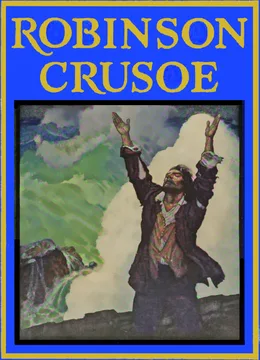
A man alone on an island builds a shelter, grows grain and keeps careful track of his days. When Robinson Crusoe appeared in London in 1719, readers could not get enough of it. Look a little closer, though, and you can see the world beyond the island too: an England that ran on ships, money and account books.
Young men who wanted the sea
Crusoe goes to sea against his father's wishes. His father urges him to settle for a steady middle station in life, but Crusoe wants adventure and fortune. England at the time traded by sea with the Americas, Africa and Asia, and its ports were full of young men hoping to make their fortunes the same way.
The author, Daniel Defoe, was a merchant and a journalist. He fell deeply into debt in business, and he was punished for a political pamphlet he wrote. Because he understood trade so well, his hero naturally thinks like a merchant, counting what things are worth and weighing gains against losses even when no one else is around.
A real sailor left on an island
A few years before the novel came out, the English public was fascinated by the story of Alexander Selkirk, a Scottish sailor who spent several years alone on an island in the Juan Fernández group off the coast of Chile before he was rescued. Many scholars think Defoe drew on that story. Crusoe's island, however, is placed near the Caribbean, and he lives there far longer.
Diaries, ledgers and a Bible
To keep from losing track of time, Crusoe cuts a notch into a wooden post each day. With paper and ink saved from the wreck, he keeps a journal, and at one point he lists the good and bad sides of his situation in two columns, just like a ledger. He also finds a Bible among the ship's goods, and reading it, he begins to look back on his life and to pray.
These habits belonged to many English Protestants of the period, who kept diaries to examine their hearts and to look for God's hand in ordinary events. A merchant's ledger and a believer's journal meeting in one person is part of what makes Crusoe such an unusual character.
A question to think about
Before he ever reaches the island, Crusoe is captured by North African pirates and held as a slave. Yet after he escapes with a boy named Xury, he sells the boy to a ship's captain, and the voyage that ends in his shipwreck was meant to bring enslaved Africans back to plantations. Having known slavery himself, he still trades in other people's freedom, which shows how the commerce of his time treated human beings as goods.
Some of the things we buy today may still be made with forced or child labor somewhere along the way. If we never harm anyone directly, what responsibility do we carry when we buy and use what that labor produced? And what might Crusoe have seen differently on the day he sold Xury?