
Lesson · Aesop's Fables
Who Added the Moral to Aesop's Fables?
The neat one-line lessons at the end of Aesop's fables were often added later, which leaves room for readers to find their own.
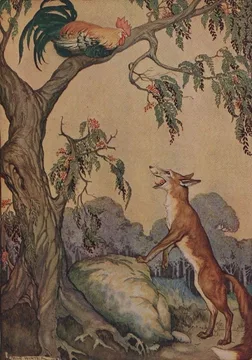
The tortoise and the hare. The ant and the grasshopper. The boy who cried wolf. Most of us hear Aesop's fables long before we can read them. But the tidy one-line moral at the end of each story may not have been there at the start.
A storyteller we barely know
Aesop is said to have lived in ancient Greece around the sixth century BC. The Greek historian Herodotus mentions him, and old tradition holds that he was enslaved. Beyond that, very little about his life is certain.
He left no book of his own. The stories linked to his name were passed along by word of mouth for generations before later writers gathered them into collections, and scholars think many "Aesop" fables were actually made up long after he lived. Over time his name became a kind of label for a whole family of short animal tales.
The moral came later
When editors collected the fables, they often tacked a lesson onto the end: this story shows that, and so on. It was a helpful nudge, making sure readers did not miss the point. But the lessons were never completely fixed. Different collections, in different centuries, sometimes drew slightly different morals from the same tale.
Take the ant and the grasshopper. The usual moral is about planning ahead: the ant works all summer and has food in winter, while the grasshopper sings and goes hungry. Yet plenty of readers notice something else as well. The ant shuts the door on a hungry neighbor. Is that wisdom, or is it a little cold? A story only a few sentences long can hold more than one lesson.
Why tiny stories last
Aesop's characters are usually animals with one strong trait. The fox is clever, the lion is powerful, the tortoise is slow but steady. Using animals instead of people lets listeners step back. A scene that might sting if it were about us is easier to laugh at when it is about a fox.
Some fables have even moved into everyday speech. A fox who cannot reach a bunch of grapes walks away telling himself they were probably sour anyway. That is where the English phrase "sour grapes" comes from: pretending you never wanted the thing you could not get.
Here are a few ways to read a fable together at home:
- Cover the moral and read only the story first.
- Each person writes a one-line lesson of their own.
- Compare your lessons and talk about which character you felt for.
A question to think about
The ant keeps the food it gathered all summer, and the grasshopper, who only sang, goes hungry in winter. The people who collected the fables attached a moral about planning ahead, but some readers notice first that the ant shut its door on a hungry neighbor. Societies still argue about the same thing today: who should help people who did not prepare, and how far that help should go.
When the right to keep what you worked for meets the duty not to turn away a hungry neighbor, what moral would you write for this story? And if the grasshopper's songs brought joy to everyone around, should that count as work too?