
Era · Alice's Adventures in Wonderland
Alice Was Born in a World Full of Rules
A boat trip in 1862, an Oxford mathematician and the strict Victorian world behind Alice's Adventures in Wonderland.
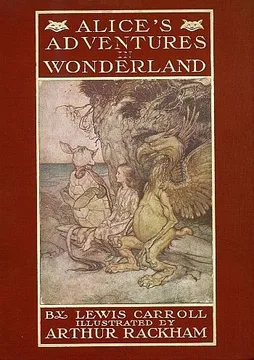
A girl tumbles down a rabbit hole. A White Rabbit checks his pocket watch. A tea party never ends. Alice's Adventures in Wonderland can feel like pure nonsense, a dream with no rules at all. But it was written in an age famously fond of rules, and that is a big part of the joke.
An age of good manners
The Victorian era takes its name from Queen Victoria, who reigned from 1837 to 1901. Britain was changing quickly, with railways and factories spreading across the country, but at home and in the classroom children were expected to be polite, quiet and correct. They memorized poems and recited lessons word for word. Many children's books of the time were written mainly to teach good behavior.
Read Alice with that in mind and the comedy sharpens. In Wonderland, Alice keeps trying to recite poems she learned at school, and the words keep coming out wrong. Several of the poems in the book are parodies, playful rewrites, of moral verses that Victorian children really did learn by heart.
The mathematician behind the pen name
Lewis Carroll was a pen name. The author's real name was Charles Lutwidge Dodgson, and he taught mathematics at Christ Church, a college of Oxford University. He was also an early enthusiast of photography, at a time when cameras were still rare and fiddly to use.
His love of logic and wordplay runs all through the book. Wonderland's characters take words literally, twist their meanings, and argue with total confidence from reasons that make no sense at all. For a mathematician, good nonsense was something to build carefully, piece by piece.
An afternoon on the river
The dean, or head, of Christ Church was Henry Liddell, and Dodgson became friendly with his daughters Lorina, Alice and Edith. On 4 July 1862, Dodgson and a friend rowed the three girls along the river for a summer outing. To entertain them, he made up a story about a girl named Alice who fell into a strange world below ground.
Ten-year-old Alice Liddell asked him to write the story down. He did, by hand, adding his own drawings, and gave her the manuscript as a gift. He later expanded it, and in 1865 it was published as Alice's Adventures in Wonderland, with illustrations by John Tenniel. For many readers, Tenniel's pictures are still what Alice looks like.
A question to think about
Victorian children were taught to memorize moral poems and to follow the manners adults set for them exactly. Carroll twisted those very poems into nonsense, showing how silly a rule can look when people follow it without knowing why. Rules protect a community, but sometimes they protect only the convenience of whoever made them.
How can you tell whether a rule really serves everyone or mainly serves the people with power? If there is a rule at home or at school you would like to question, how could you challenge it respectfully and still try to change it?