
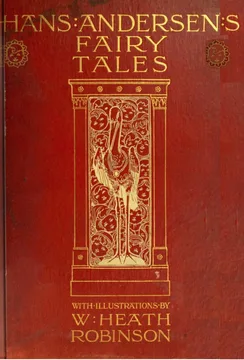
Era · Andersen's Fairy Tales
The Real Denmark Hiding Inside Andersen's Fairy Tales
Andersen grew up poor in nineteenth-century Denmark, and the cold streets, rigid classes and working children of his time quietly fill his fairy tales.
Andersen's fairy tales are full of princesses, emperors, tin soldiers and talking ducks. But behind the magic stands a very real place and time. Read closely, and you can glimpse Denmark nearly two hundred years ago.
A shoemaker's son
Hans Christian Andersen was born in 1805 in Odense, a small town in Denmark. His father was a shoemaker and his mother washed other people's laundry to help the family get by. Money was always short, and his father died when Andersen was about eleven.
At fourteen, Andersen set off alone for Copenhagen, the capital, dreaming of becoming an actor or a singer. The big city was not kind at first. He went hungry, was laughed at, and struggled for years before he found his place as a writer. In 1835 he published his first small collection of fairy tales for children, which included "The Tinderbox" and "The Princess and the Pea." Many more followed over the next decades.
Children on cold streets
In Andersen's Denmark, it was common for children from poor families to work. Instead of going to school, many of them earned what they could in workshops or on the streets.
"The Little Match Girl" shows this world clearly. On the last night of the year, a barefoot girl wanders through the snow trying to sell matches. People hurry past to their warm homes, and no one buys a single one. To warm her frozen fingers, she begins to strike the matches one by one. The story is invented, but a scene like this would not have looked strange on a winter evening in Copenhagen.
A society of fixed places
Denmark at the time was an absolute monarchy, meaning the king held all the power. That did not change until the country adopted a constitution in 1849. The gap between nobles and ordinary people, and between rich and poor, was wide. The family you were born into shaped almost everything about your life.
You can feel this in the tales. In "The Emperor's New Clothes," the officials around the ruler are too afraid to speak honestly and simply follow along. In "The Ugly Duckling," a young bird is mocked and pushed around just for looking different. Many readers see Andersen's own life in these stories: a poor boy from a small town who was looked down on for years before the world finally listened to him.
A question to think about
In "The Little Match Girl," crowds of people walk right past a barefoot child standing in the snow. That did not only happen in Denmark long ago. Today, children in many parts of the world still work instead of going to school, and people still sometimes look away from neighbors who need help because they are busy or unsure what to do.
Why do you think people so often fail to notice someone in need who is standing right beside them? And what might help each of us notice a little more?