
Lesson · Grimms' Fairy Tales
What Old Fairy Tales Still Teach Us About Courage and Kindness
Two centuries ago, the Brothers Grimm wrote down tales of clever children and kind strangers, and their lessons still offer families plenty to talk about.
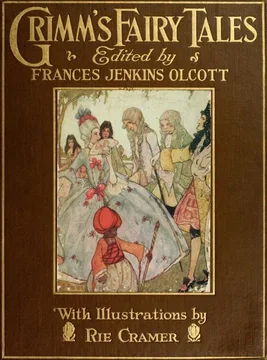
Many of us first met Hansel and Gretel, Rapunzel, or the Bremen Town Musicians at bedtime, long before we knew where they came from. These stories spread around the world from a collection gathered by two German brothers more than 200 years ago. Today, let's look at the lessons tucked inside Grimms' Fairy Tales and how a family might talk about them now.
Two brothers with notebooks
Jacob and Wilhelm Grimm were scholars who studied the German language and old folk traditions. They worried that stories passed along by word of mouth might disappear, so they listened to storytellers among their neighbors and acquaintances and wrote the tales down. Their first volume appeared in 1812, under a title that means "Children's and Household Tales."
The book kept changing. Over later editions the collection grew to more than 200 stories, and Wilhelm in particular smoothed the language. In some tales, a cruel mother in the first edition became a stepmother in later ones, a change made with young readers in mind.
Small heroes, big ideas
Again and again, the Grimms' heroes are the smallest and weakest: a child, a youngest brother, someone everyone underestimates. In "Hansel and Gretel," Hansel overhears that he and his sister will be left in the forest. Instead of simply panicking, he slips outside at night, fills his pockets with white pebbles, and drops them one by one along the path. It is a quiet lesson for any child: when you are scared, stopping to think can help you find a way.
Kindness matters too. In "The Golden Goose," the youngest son, mocked as a simpleton, meets a little old man in the woods and shares his humble food, something his older brothers refused to do. That small act of generosity is where his luck begins to turn.
Reading them together today
Some Grimm tales are frightening, even harsh. Folk stories were once shared by adults and children alike, and they did not hide the darker side of life. Rather than skipping those moments, families can pause and ask: Why did this character act that way? How do you think the hero felt right then? Talking about the choices characters make often teaches more than the simple formula that good people get rewarded.
A question to think about
In "The Bremen Town Musicians," a donkey has carried heavy sacks for years, but when he grows old and weak, his master decides he is no longer worth feeding, so the donkey sets off on his own. Along the way he meets a dog, a cat, and a rooster facing similar fates simply because they have grown old. Today, too, aging or sick pets are sometimes abandoned, and people are sometimes judged mainly by how useful they are.
How should we treat animals or people who can no longer do as much as they once did, and why? What is one thing your family or neighborhood could do for them?