
Lesson · Jane Eyre
Jane Eyre and the Courage to Speak Up
What young Jane learns about self-respect and forgiveness at Gateshead and Lowood, and how Charlotte Brontë's own schooldays shaped the story.
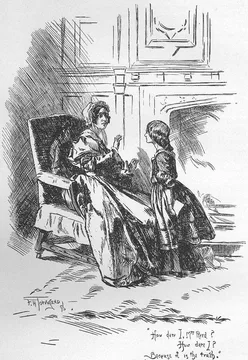
A ten-year-old orphan stands before the aunt who has raised her and calmly lists every injustice she has suffered. When Jane Eyre was published in 1847, this scene startled many readers. A child speaking that way to an adult, and to a guardian at that, was not something they expected to find in a novel.
The girl in the red room
Jane has lost both parents and is growing up at Gateshead, the home of her late uncle. Before he died, he asked his wife to raise Jane as one of her own, but Mrs. Reed treats her coldly. When her cousin John Reed strikes her, Jane is the one who is punished. One day she is locked in the red room where her uncle died, and she is so terrified that she faints.
Eventually Jane pours out her sense of injustice to her aunt. In that moment we see that even in a powerless position, she knows she deserves to be treated with respect. That steady sense of her own worth drives the whole novel.
A different way at Lowood
Mrs. Reed sends Jane away to Lowood, a charity school. The food is scarce, the winters are bitter, and Mr. Brocklehurst, who runs the school, talks constantly about religion while treating the girls harshly. In front of the whole school, he makes Jane stand on a stool and calls her a liar.
At Lowood, Jane befriends Helen Burns. When Helen is treated unfairly, she does not rage. She tries to endure and forgive, holding close the biblical teaching to love one's enemies. Their conversations set two responses side by side, Jane's urge to resist injustice and Helen's patience, and invite readers to ask how standing up for oneself and forgiving others might go together.
A school drawn from memory
As a girl, Charlotte Brontë attended a boarding school for the daughters of clergymen along with her older sisters. Conditions there were hard, and her two eldest sisters, Maria and Elizabeth, fell ill, came home and died while still children. That memory runs deep in the pages about Lowood. Charlotte first published the novel under the name Currer Bell, partly because she felt women writers were not judged fairly.
A question to think about
Mr. Brocklehurst was supposed to care for the girls in his school, yet he stood Jane on a stool and called her a liar in front of everyone. Adults with power publicly shaming children is still a problem in schools and care homes today, and sometimes it is treated as abuse. Jane's way of resisting and Helen's way of enduring each carry their own weight.
When you are treated unjustly, how can speaking up to protect yourself and forgiving the other person go together? What would adults in schools and care homes need to change so that children feel safe telling the truth about how they are treated?