
Story · Winnie-the-Pooh
A Bear of Little Brain and the Friends Who Love Him
Meet Pooh, Piglet, Eeyore and the rest of the Hundred Acre Wood, and discover why these small, gentle adventures still feel so warm nearly a century later.
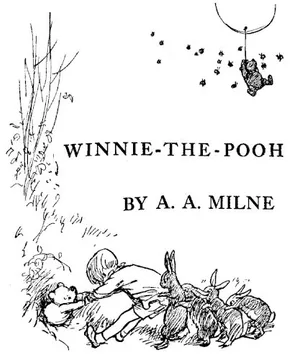
There is a bear who cannot pass a honey pot without stopping for "a little something." He admits he is not very clever, yet when a friend is in trouble, he is often the first to set off and help. A. A. Milne's Winnie-the-Pooh, first published in 1926, has been making children and grown-ups laugh together ever since.
A story told to a real boy
The book opens with a storyteller telling bear stories to a boy named Christopher Robin. That was the real name of Milne's son, and Pooh and his friends grew out of the boy's own stuffed toys. The "Winnie" part of Pooh's name is widely said to come from a black bear called Winnipeg who lived at London Zoo.
The setting, the Hundred Acre Wood, was inspired by Ashdown Forest in Sussex, England. An acre is a way of measuring land, and to a small child a hundred of them sounds wonderfully endless. The soft pencil drawings by illustrator E. H. Shepard help make this wood feel like a real place you could walk into.
A wood full of different friends
Pooh loves honey and likes to make up little songs. Piglet is very small and easily frightened, but he sticks close to his friends anyway. Eeyore, the old grey donkey, tends to expect the worst. Rabbit is busy organizing everyone, Owl enjoys sounding wise, and Kanga, a mother kangaroo, arrives in the wood with her baby, Roo.
None of these friends is perfect. They worry, show off, grumble and make mistakes. That is exactly why readers so often find themselves, or someone they know, among them.
Small adventures, big laughs
Each chapter is a short adventure you can enjoy on its own. Pooh eats so much honey at Rabbit's house that he gets stuck in the front door. Pooh and Piglet follow mysterious footprints in the snow, round and round a clump of trees. Pooh goes looking for Eeyore's lost tail and finds it somewhere quite unexpected.
There are no terrible villains or great battles, and yet the stories feel full of suspense and fun. Milne plays with language, giving Important Words capital letters and letting Pooh mix up long words, so the world looks just the way a young child might see it. Read aloud, the sentences have a lovely rhythm, which makes this a fine book for a parent and child to share at bedtime.
A question to think about
On Eeyore's birthday, Pooh brings him an empty jar, because he ate the honey on the way, and Piglet brings a balloon that burst when he tripped. The presents are a mess, but what shines through is that they remembered a friend who usually feels left out. Today, too, many classrooms and neighborhoods have someone like Eeyore who feels quietly lonely.
When someone near us always seems gloomy or alone, what could we do to help them feel truly included? And when we want to show we care, what matters more than how a gift looks?