
Lesson · Black Beauty
What Black Beauty Teaches About Kindness
Told by a horse, Black Beauty asks readers to see cruelty and kindness from the animal's side.
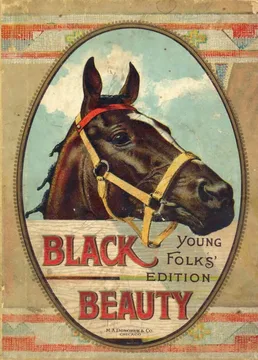
Black Beauty is a novel narrated not by a person but by a horse. Readers see stables, streets, gentle owners and harsh ones from the animal's point of view. Its author, Anna Sewell, was not simply writing a pleasant animal story. She wanted to change how people behaved.
A writer who depended on horses
Anna Sewell was born in 1820 in Great Yarmouth, in Norfolk, England. After injuring her ankles as a girl, she found walking difficult for the rest of her life and relied on horse-drawn carriages to get about. That gave her years of close observation: how intelligent and sensitive horses are, and how much they change depending on the hands that hold the reins.
Sewell wrote the novel during her final years, when she was often confined to bed by illness. When she was too weak to write, she is said to have dictated passages to her mother. The book was published in 1877, and Sewell died only a few months later. She explained that her aim was to encourage kindness, sympathy and an understanding treatment of horses.
A rein worn for looks
One of the scenes readers remember is the story of the bearing rein. This was a strap that held a horse's head high. Fashionable owners of the day liked it because a horse with its head held up looked elegant.
But a horse forced to hold its head that way cannot pull properly up a hill, and the strain hurts its neck and mouth. Black Beauty describes this pain plainly, without melodrama. Readers come away seeing how far apart what looks good to people and what is good for an animal can be.
Kindness that reaches people too
Sewell's kindness does not stop with horses. In London, Black Beauty works for Jerry, a cab driver who is poor but honest and warm. Jerry wants Sundays off and refuses to drive his horse into the ground. The novel also shows how long cabmen worked and how little they earned. For Sewell, cruelty to animals and carelessness toward working people grew from the same root.
Which owner Black Beauty ends up with is something readers should follow for themselves.
A question to think about
The bearing rein forced a horse's head up so that it looked elegant, and it left the animal in pain and unable to pull properly. What pleased human eyes caused suffering for the horse. Today we still hear about pets bred for cute features that make breathing hard, and farm animals raised in cramped conditions to keep prices low.
How far are we justified in taking pleasure or convenience from animals? And once we learn that animals are paying the cost, what can one ordinary shopper or pet owner realistically change?