
Author · A Christmas Carol
The Factory Boy Who Grew Up to Write A Christmas Carol
How a childhood job in a blacking warehouse shaped Charles Dickens and the Christmas story he wrote in 1843.
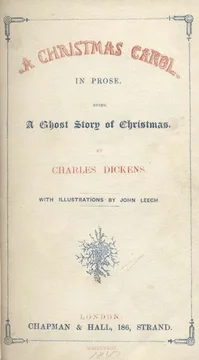
Every December, Ebenezer Scrooge meets his three ghosts all over again, on stage, on screen and on bedside tables. The story has been retold more times than anyone could count. Yet the man who wrote it carried a painful secret from his own childhood, and that secret helps explain why the story feels so urgent.
A secret from a blacking warehouse
Charles Dickens was born in 1812 in Portsmouth, on England's south coast. His family was often short of money, and when he was a boy his father was sent to the Marshalsea, a London prison for people who could not pay their debts. Around the age of twelve, Charles was taken out of school and sent to work in a warehouse that made blacking, a polish for leather boots. His job was to paste labels onto the pots.
The work did not last forever, but the shame did. Dickens kept this chapter of his life almost entirely to himself. Most readers only learned about it after his death, when his friend John Forster published a biography. Yet the memory found its way into his fiction again and again: hungry children, working children, children the grown-up world refused to see.
Why 1843?
By 1843 Britain was filling up with new factories and crowded cities. That year Dickens read a government report describing children working in mines and factories, and he visited a "ragged school," a free school for the poorest children of London. He was shaken. At first he planned to write a pamphlet, a short booklet arguing for change. Then he decided that a story might reach more hearts than an argument ever could.
He wrote A Christmas Carol in a matter of weeks, and it appeared in December, just in time for the holiday. It quickly found eager readers. Scrooge's change of heart carries the message Dickens cared about so deeply: no one can afford to look away from a neighbor in need.
The author on stage
Dickens adored the theater, and later in life he found a way to bring his books to audiences in person. He began giving public readings, and the very first was A Christmas Carol, read to raise money for charity. Over the years he toured Britain and traveled to the United States, filling large halls. He changed his voice and his face for each character, so a reading felt less like a lecture and more like a one-man play. Imagine sitting in the audience as the author himself turned into Scrooge, grumbling and then, at last, laughing.
A question to think about
At twelve, Dickens worked in a blacking factory instead of going to school, and as an adult he wrote this story after reading a report about children in mines and factories. He believed a story could move people more than an argument. Children around the world still go to work instead of school, and some of the things we buy may be tied to that labor.
Do shoppers who choose the cheapest goods share any responsibility for the children who made them? If so, how far does that responsibility go, and what could your family actually do about it?