
Author · Don Quixote
Cervantes Was a Soldier and a Captive Before He Wrote Don Quixote
Before Don Quixote, Miguel de Cervantes fought at Lepanto, spent five years as a captive in Algiers, and struggled to make a living.
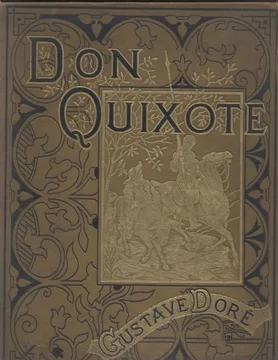
Most people know at least one scene from Don Quixote: an old man in battered armour charging at windmills because he believes they are giants. The man who invented him, Miguel de Cervantes, lived a life full of danger, bad luck, and second chances, and much of that experience found its way into his famous comic novel.
A soldier at Lepanto
Cervantes was born in 1547 in Alcalá de Henares, a university town near Madrid. As a young man he went to Italy and joined the Spanish forces. In 1571 he fought at the Battle of Lepanto, a huge sea battle in the Mediterranean in which an alliance including Spain and Venice faced the fleet of the Ottoman Empire.
According to accounts of the battle, Cervantes was sick with fever that day but refused to stay below deck. He was shot in the chest, and a wound to his left hand left it permanently useless. He was proud of his service for the rest of his life, and he came to be known as the "one-handed man of Lepanto."
Five years in Algiers
In 1575, while sailing home to Spain, Cervantes's ship was captured by pirates. He was taken to Algiers in North Africa and held for ransom. He spent five years there and tried to escape several times. Each attempt failed, and records suggest he tried to take the blame himself to protect others.
In 1580 he was finally ransomed, with money gathered by his family and a religious order that worked to free captives. Back in Spain, life remained difficult. He worked collecting supplies for the navy and later collecting taxes, and problems with his accounts landed him in prison more than once.
Turning knightly tales upside down
In Cervantes's day, romances about knights were wildly popular in Spain. These books were full of heroic knights, dragons, enchanters, and rescued princesses. Cervantes imagined a country gentleman who reads so many of them that he decides he is a knight himself, sets out on a bony old horse, and drags a practical farmer named Sancho Panza along as his squire. A work that copies the style of another kind of writing in order to poke fun at it is called a parody.
The first part of Don Quixote appeared in 1605 and was a great success, so much so that another writer published an unauthorised sequel. Cervantes answered with his own second part in 1615. He died the following year, in 1616. Under the jokes, readers often sense the wry humour of a man who had seen war and captivity and still chose to laugh.
A question to think about
Don Quixote reads so many tales of knights that he believes windmills are giants and charges at them. Four hundred years ago that was a joke, but today we spend whole days reading posts and watching videos on screens. Believing a convincing but invented story is not only Don Quixote's problem.
How can you check whether something you believe is a windmill or a giant? And when a friend or relative believes something untrue, how can you tell them the truth without mocking them or damaging the relationship?