
Lesson · Just So Stories
What the Elephant's Child Teaches About Asking Questions
Kipling's tale of a curious young elephant invites families to talk about why questions matter and how we answer them.
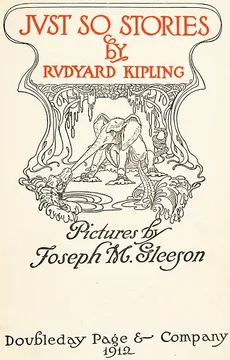
Was the elephant's trunk always long? In Just So Stories, first published in 1902, Rudyard Kipling answers questions like this with playful, made-up explanations. Behind the jokes, each story leaves something worth chewing on.
Stories told "just so"
Kipling first told these tales aloud to his young daughter. She is said to have insisted that he tell them exactly the same way every time, word for word, "just so", and the name stuck. That is why the book sounds like it wants to be read out loud: phrases repeat like little songs, and the narrator often speaks straight to "Best Beloved", the listening child. Kipling also drew the pictures himself and wrote chatty captions explaining them. The collection imagines how animals came to look the way they do, from the camel's hump to the leopard's spots.
A small elephant with big questions
The most famous story is "The Elephant's Child." Long ago, Kipling tells us, elephants had short, bulgy noses. One young elephant was full of what the story calls "'satiable curtiosity", a funny way of saying insatiable curiosity, meaning a curiosity that can never be filled up. He asked everyone everything: why the ostrich's feathers grew as they did, why the giraffe had spots. Instead of answers, his relatives gave him spankings. Still he kept asking. At last he wondered what the Crocodile eats for dinner, and he set off to find out, all the way to "the great grey-green, greasy Limpopo River, all set about with fever-trees." What happens there is a discovery best saved for your own reading.
The value it leaves behind
At its heart, the story celebrates the urge to ask. The Elephant's Child is scolded again and again, yet he refuses to stop wondering, and that persistence ends up changing him. But the tale also carries a quieter warning: rushing alone into the unknown can be risky. So the story offers two messages side by side. One says, "It's good to ask." The other says, "Finding out also takes wisdom." When a family reads it together, children may cheer for the little elephant, while grown-ups may wince a bit at the relatives who were too busy or too annoyed to answer.
A question to think about
Every time the Elephant's Child asked something, the adults around him punished him instead of helping him understand. Today, too, children's questions are often brushed aside because adults are busy, tired, or uncomfortable with the topic. Whose voices get listened to, and whose get ignored, is a question of fairness that reaches far beyond one family.
When a grown-up is busy or a question feels awkward, what would be a fair way to respond to a child who wants to know something? And when you are trying to find something out, where does bravery end and recklessness begin?