
Story · The Tale of Peter Rabbit and Other Tales
Why We Still Root for a Rabbit Who Breaks the Rules
A small rabbit slips into the one garden he was told to avoid, and readers have been holding their breath with him for more than a century.
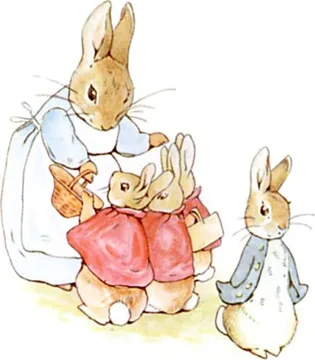
One morning, old Mrs. Rabbit gives her four children a simple rule. They may play in the fields or down the lane, but "don't go into Mr. McGregor's garden." Three of them listen. The fourth, a small rabbit in a blue jacket, heads straight for the garden gate.
A little rabbit with a big appetite
The Tale of Peter Rabbit, first published in 1902, is the story of that fourth rabbit. While his sisters Flopsy, Mopsy and Cotton-tail go off to gather blackberries, Peter squeezes under the gate and starts eating: lettuces, French beans, radishes. He is having a wonderful time until the gardener, Mr. McGregor, spots him.
What makes the opening so gripping is that Mrs. Rabbit's warning is not just fussing. She tells her children plainly that their father had an accident in that very garden. Beatrix Potter states this calmly, without drama, and young readers feel the danger at once. From that moment, every row of cabbages seems a little more risky.
Animals that move like animals
Potter grew up keeping and sketching real animals, including rabbits, mice and a hedgehog. That close watching shows on every page. Peter wears a jacket and shoes, yet he crouches, freezes and bolts the way a real rabbit does. He is clever, frightened, greedy and brave all at once, which makes him feel less like a cartoon and more like a small living creature in serious trouble.
The pictures are painted in watercolour, a soft, see-through kind of paint, and they show a gentle English countryside of vegetable beds, watering cans and garden ponds. The calm scenery makes the chase feel even more exciting by contrast.
A story that began as a letter
Peter first appeared in 1893, in a picture letter Potter wrote to cheer up a young boy named Noel who was ill. Years later, when she turned the story into a book, she wanted it small enough for a child's hands, with a few lines of text and a picture on each spread. That design still works beautifully for children who are just beginning to read on their own.
This collection gathers Peter's tale together with stories of his friends and neighbours: his cousin Benjamin Bunny, the cheeky red squirrel Squirrel Nutkin, the trusting Jemima Puddle-Duck and others. Each character has a sharp personality, and most readers end up with a favourite.
A question to think about
To Peter, Mr. McGregor's garden is a feast. To Mr. McGregor, it is food he has worked hard to grow. That same tension still exists today, as farmers struggle with deer, boars or birds eating their crops, while wild animals lose their homes and food as towns and farms spread into fields and forests. Peter's adventure is a small picture of a big question about sharing land.
How can people who need to protect their crops and wild animals who need to eat find a fair way to live side by side? And how might this story sound if Mr. McGregor were the one telling it?