
Story · The Jungle Book
Mowgli at the Council Rock
Written in snowy Vermont, The Jungle Book begins with a baby, a wolf family and a pack that must decide.
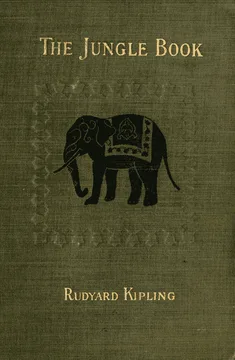
A naked baby toddles into a wolves' cave, escaping a tiger. That is how Mowgli's story begins. Many people first meet The Jungle Book through animated films, but Rudyard Kipling's original stories are wilder and more serious, built around a code the animals call the Law of the Jungle.
Born in India, written in Vermont
Kipling was born in 1865 in Bombay, now Mumbai, and his early years in India left a deep mark on him. Yet he wrote The Jungle Book far away, in the state of Vermont in the United States. After his marriage he built a house near his wife's family home and lived there for a few years, picturing Indian jungles while snow piled up outside. The book came out in 1894.
It is not one long novel but a collection of tales. Alongside the Mowgli stories are others, including Rikki-Tikki-Tavi, about a mongoose who faces down cobras, and The White Seal, about a seal searching for a beach where hunters never come.
The night of the full moon
The wolf parents name the baby Mowgli, meaning little frog, and decide to raise him with their cubs. But by the Law, every cub must be presented to the pack and accepted. On a moonlit night the wolves gather at the Council Rock, watched over by their leader, Akela. Shere Khan, the lame tiger, growls that the man-cub belongs to him.
The ones who speak up for the child are not wolves. Baloo, the old bear who teaches the wolf cubs the Law, takes Mowgli's side, and Bagheera, the black panther, offers a freshly killed bull in exchange for the boy's acceptance. That is how Mowgli joins the pack.
A jungle with rules
Kipling's jungle is not a free-for-all. There are rules for hunting and for drinking at the water, and Baloo drills Mowgli in the calls and greetings of every kind of animal. The Bandar-log, the monkey people, chatter endlessly and keep no law, and the rest of the jungle looks down on them. When they kidnap Mowgli, even Kaa the great python is drawn into the rescue.
Mowgli grows up in the jungle, yet he always senses that he is not quite a wolf. Where he finally belongs is a question the book itself answers.
A question to think about
Mowgli was loved by his wolf family, but to belong to the pack he had to be accepted at the Council Rock, and he was taken in only after Baloo spoke for him and Bagheera paid with a bull. Today migrant and refugee children arriving in a new country are often asked for sponsors, papers or proof before they are allowed to stay.
When a community decides whether to accept a newcomer, are conditions simply a fair way to protect the group, or is there a line they should not cross? Should the rules be different for a child who, like Mowgli, never chose where to go?