
Era · The Secret Garden
Mary Lennox, a Child of the Empire
How British rule in India, a cholera outbreak and the Yorkshire moors frame The Secret Garden.
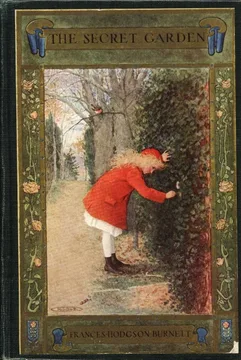
Most readers remember The Secret Garden for its robin, its buried key and its locked door in a wall. Yet the story opens far from any English garden, in the heat of India. Knowing why Mary Lennox was born there tells us a great deal about the world Frances Hodgson Burnett was writing in.
Born far from home
Burnett published the novel as a book in 1911. At that time India was ruled by Britain, and many British officials and army officers lived there with their families. Mary's parents belong to that world. Her father is absorbed in his work and her mother in parties, so the girl is raised almost entirely by an Indian nurse and a household of servants.
Burnett does not pretend Mary is sweet. She is sour, bossy and used to giving orders. She has never been taught to say thank you. The novel quietly suggests this is less about her nature than about her upbringing: no one has really loved her, and no one has ever told her no.
Cholera and a voyage north
Then cholera sweeps through the household. Cholera is a disease spread through dirty water, and in that era it could kill many people within days. Orphaned, Mary is shipped to England to live with her uncle, Archibald Craven, in a huge, gloomy house on the edge of the Yorkshire moors.
It was not unusual for British children born in India to be sent back to a country they had never seen. For Mary, England is grey, windy and cold. The house has around a hundred rooms, most of them shut, and at night she hears someone crying.
Wind, soil and fresh air
What begins to change Mary is not a lecture but the outdoors. Martha, a young housemaid, and her brother Dickon speak broad Yorkshire and treat Mary as an ordinary child. They introduce her to things she never did in India: running, skipping, digging in the dirt.
In Britain at the time there was a strong belief that fresh air, sunshine and outdoor play were good for children's bodies and spirits. Burnett herself loved gardening and is known to have tended a walled rose garden at the country house in Kent where she lived for years. How the locked garden comes back to life is something readers should discover for themselves.
A question to think about
In India, Mary grew up giving orders to her nurse and the servants, and she never learned to say thank you. Burnett does not blame the child alone. She shows how a life in which others do everything for you, and in which people are ranked above and below one another, shaped Mary's manners. Today we also meet people who work for us every day: delivery riders, cleaners, cashiers.
If we are paying for a service, does that mean it does not matter how we treat the person providing it, or is there a kind of respect we owe regardless of the money? And where do children in our homes learn which answer to live by?