
Era · The Time Machine
The Time Machine and the Victorian Dream of Progress
How late nineteenth-century science, Darwin's ideas and London's class divide shaped H. G. Wells's vision of the far future.
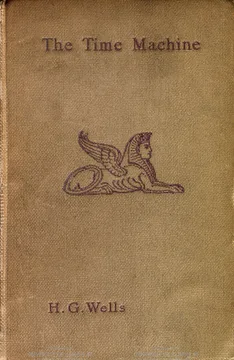
One evening a scientist shows his dinner guests a small model of a machine and tells them it can travel through time. The guests are not sure whether to believe him. So begins The Time Machine, published by H. G. Wells in 1895. To understand the distant future the book imagines, it helps to look first at the London where it was written.
When machines were changing everything
Nineteenth-century Britain was a country where machines reshaped daily life year by year. Steam railways linked city to city, and the telegraph carried news across great distances almost instantly. London opened the first underground railway in 1863, and by the end of the century electric light was spreading. People were excited, and a little uneasy, about what science might make possible next.
So the dream of time travel arrives in this story not as magic but as a machine. The Time Traveller explains that time can be thought of as a direction, much like the directions of space, and that he has built a device to move along it. Borrowing the language of science made the tale feel strangely believable.
Questions after Darwin
After Charles Darwin published On the Origin of Species in 1859, the idea that living things change over long ages stirred fierce debate in Britain. As a young man, Wells studied at a science school in London under Thomas Henry Huxley, the biologist who did so much to spread Darwin's ideas. Wells asked a bold question: might humanity itself look completely different in the far future?
The Time Traveller arrives hundreds of thousands of years ahead, in a world inhabited by the Eloi, small, gentle people who seem to spend their days in play rather than work. At first he concludes that humankind has finally built a peaceful paradise. Soon, though, he begins to sense that something lies hidden beneath that calm.
A city divided above and below
Wells did not grow up wealthy. His mother worked as a housekeeper at a grand country house, and as a boy he was apprenticed to a draper, a seller of cloth. In the London of his day, the lives of the comfortable classes and the lives of workers in factories and crowded streets were sharply split. His far future carries a strong trace of his worry about that divided world.
A question to think about
The Time Traveller tries to explain the split he finds in future humanity by tracing it back to a widening gap between those who labor and those who simply enjoy. In Wells's London, rich and poor really did live in separate neighborhoods, knowing little about each other's lives. Today, too, people discuss how new technology can widen the distance between those who enjoy its benefits and those who do the hard work behind it.
As technology advances, what should a society consider so that its benefits and burdens are shared fairly? And what would it take for people who live divided lives, barely knowing one another, to build a common life together?